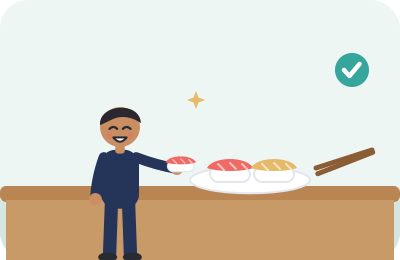
Can you eat sushi with your hands?
Yes. Nigiri sushi can be eaten with your fingers or with chopsticks; both are normal.
JAPAN MANNERS LAB · Japan Manners Guide
A picture guide to Japanese manners, and the "why" behind them, with fun quizzes.
Travelling now? Open Travel mode
Even people living in Japan may not know this one.
Yes. Nigiri sushi can be eaten with your fingers or with chopsticks; both are normal.
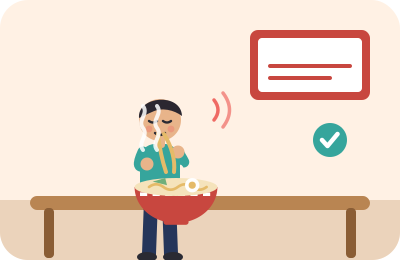
Slurping noodles is generally accepted, but you do not have to slurp. Eating quietly is fine too.
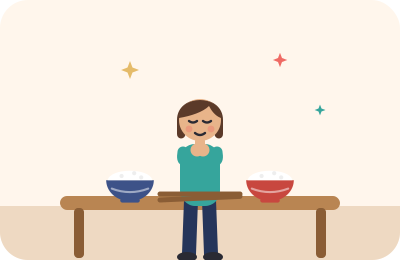
"Itadakimasu" before eating and "gochisosama" afterwards are widespread customs, not laws or rules. Saying them is a nice way to show appreciation.
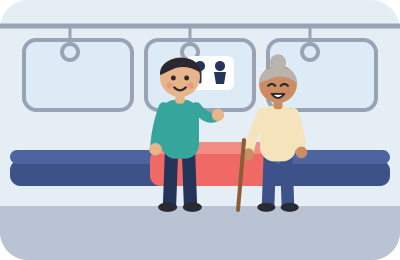
Priority seats are for older people, people with disabilities, pregnant people, those with small children and others who need them. Give them up when someone needs one.
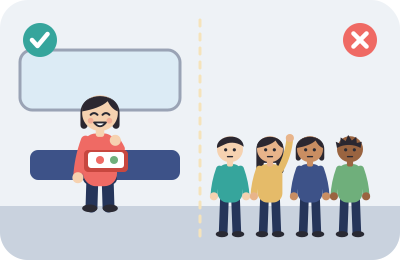
Eating ekiben (station bento) is common on the Shinkansen and limited express trains. On commuter, local and subway trains, people generally avoid eating.
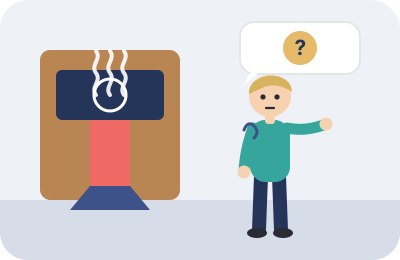
It depends on the facility. Some turn tattooed guests away and some welcome them, so check in advance.
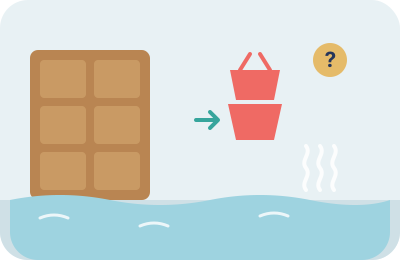
At typical onsen and public baths you bathe naked, without a swimsuit. Some facilities, however, require a swimsuit or a special bathing garment.
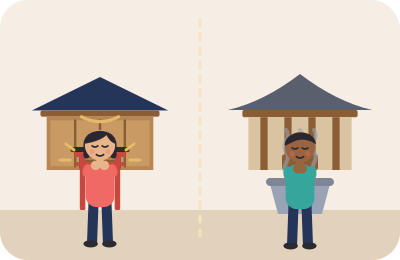
No. At shrines the basic form is two bows, two claps and one bow; at temples you put your hands together quietly without clapping.
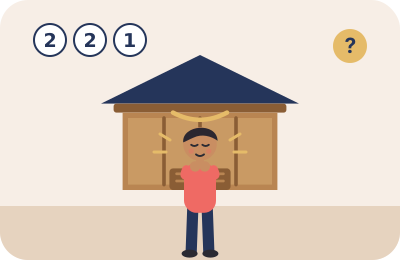
"Two bows, two claps, one bow" is the basic form at many shrines, but some shrines have their own style. At Buddhist temples, people do not clap.

There is no set amount for an offering (osaisen). Any amount is fine; it is given as a gesture of your feelings.
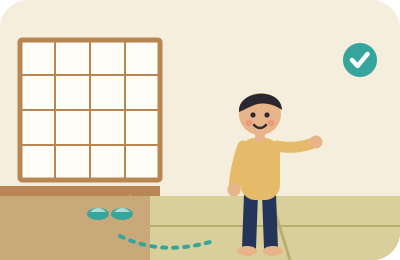
Take off your slippers before entering a tatami room. Walk on tatami in socks or bare feet.
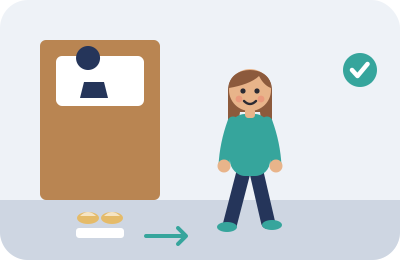
Toilet slippers are only for inside the toilet. Take them off when you leave and switch back to your own slippers.
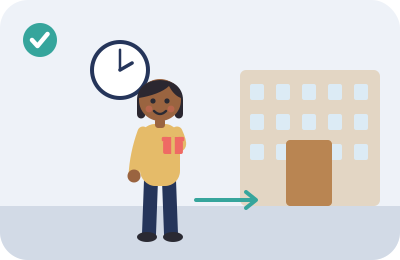
Punctuality is valued, but when visiting a home many people avoid arriving too early and aim to arrive around the agreed time.

Yes, when greeting or thanking someone. For visitors, a light nod or slight bow (eshaku) is almost always enough.
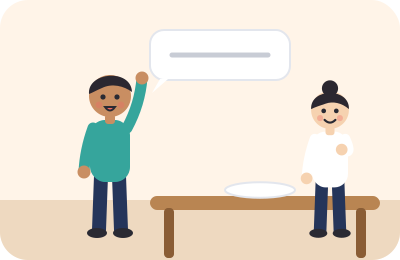
No. "Sumimasen" is also used to get someone’s attention, to ask people to let you pass and to say thank you.
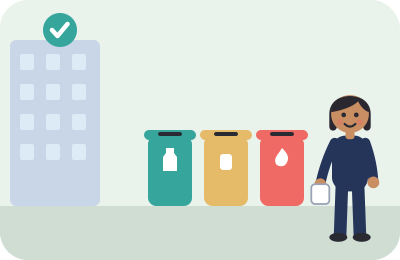
Public bins are scarce in Japan, so carry your trash with you and throw it away when you find a suitable bin, or take it back to where you are staying.
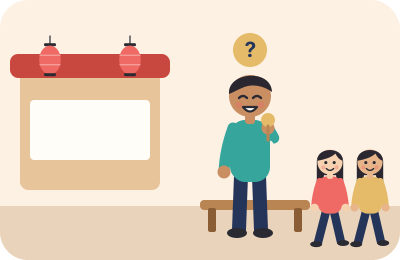
It is not banned nationwide by law, but in crowded places people are expected to stop and eat, out of consideration for others. Some tourist areas ask visitors to refrain.

Tipping is generally not customary in Japan at restaurants, in taxis, at hotels and so on. A word of thanks is enough.

If there is a tray at the register, people usually put their money on it. It is not a rule, though, and staff sometimes take money by hand.

Never hand over bare cash: put it in a special gift envelope and offer it with both hands. For weddings, new banknotes are usually used.
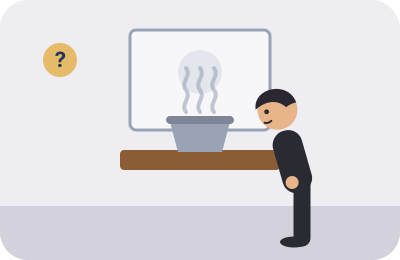
How many times you offer incense and the exact steps differ by Buddhist school. If unsure, simply follow the person ahead of you, the priest or the chief mourner.

Obon is an event to welcome ancestors’ spirits home and honour them. Most areas observe it in mid-August, some in mid-July.
Choose an answer
Pick where you are now and check just the key points.
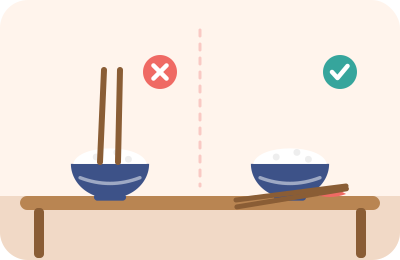
Avoid sticking chopsticks upright in your rice. When you pause, rest them on a chopstick rest or across the edge of a dish.
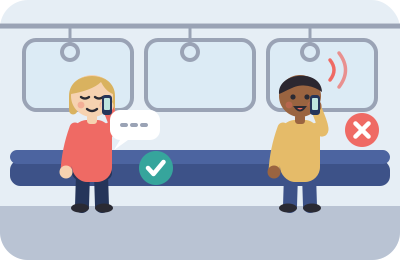
Phone calls on trains and buses are generally avoided. Keep your phone on silent ("manner mode").
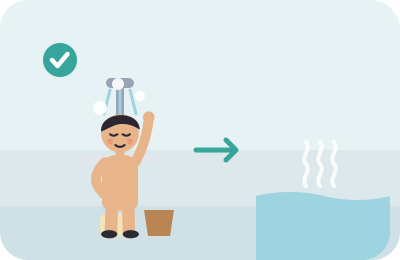
Yes. Wash at the washing area and rinse off all the soap before getting into the bath.
No. At shrines the basic form is two bows, two claps and one bow; at temples you put your hands together quietly without clapping.
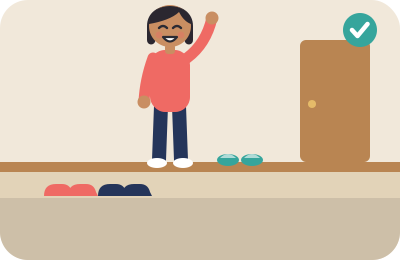
Yes. In most Japanese homes you take off your shoes at the entrance (genkan) before stepping inside.
Yes, when greeting or thanking someone. For visitors, a light nod or slight bow (eshaku) is almost always enough.
Public bins are scarce in Japan, so carry your trash with you and throw it away when you find a suitable bin, or take it back to where you are staying.
Tipping is generally not customary in Japan at restaurants, in taxis, at hotels and so on. A word of thanks is enough.
Japan Manners Lab introduces Japanese customs from the point of view of consideration for others. We separate laws, facility rules and everyday customs, and we check public and official sources.