Do you have to use the cash tray?
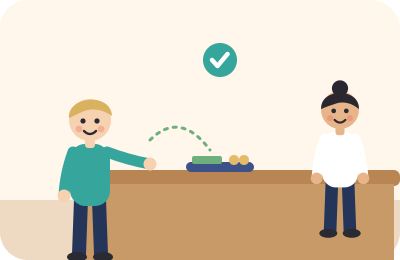
In short
Good to knowIf there is a tray at the register, people usually put their money on it. It is not a rule, though, and staff sometimes take money by hand.
When does this apply?
Registers in Japanese shops often have a small tray (sometimes called a karuton) for money. Place your notes on it neatly unfolded, and your change will often come back on the tray too.
Why?
It is said to make the exchange clear so that both staff and customer can easily check the amount. It also means hands do not have to touch.
What to do
- If there is a tray, place your notes on it neatly
- Check your change and receipt
- Check in advance whether cashless payment is accepted
Better to avoid
- Toss money onto the tray
Exceptions and differences
Some shops have no tray, and some staff take money by hand. With cashless payment and self-checkout machines becoming common, trays are often not used at all.
Manners can differ by region, facility and generation. Local signs and staff instructions come first.
Check with a quiz
There is a tray for money at the register. What should you know?
Choose an answer
Sources
- Japan Shopping Guide: How to Shop(opens in a new tab)
- Japanese Customs and Etiquette(opens in a new tab)
Last checked:
This text was written with AI assistance and has not yet been proofread by a person.