Do you take your shoes off in Japanese homes?
In short
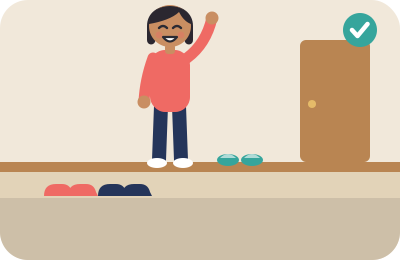
Good to knowYes. In most Japanese homes you take off your shoes at the entrance (genkan) before stepping inside.
When does this apply?
The entrance has a lower area where you stand in your shoes and a raised floor beyond it. Take off your shoes in the lower area, then step up. The same applies at ryokan inns and some restaurants and temples.
Why?
Daily life in Japan traditionally took place on the floor, sitting and sleeping on futons, so keeping outside dirt out of the house became a firm habit.
What to do
- Take off your shoes before the step in the entrance
- Line your shoes up neatly at the side, toes pointing outward
- Put on slippers if they are provided
Better to avoid
- Step up onto the raised floor with your shoes on
- Leave your shoes scattered around
Exceptions and differences
Many Western-style homes, offices and shops let you keep your shoes on. If unsure, look for a step or shoe cupboard at the entrance, or other people’s shoes lined up.
Manners can differ by region, facility and generation. Local signs and staff instructions come first.
Check with a quiz
When you enter a Japanese home, what about your shoes?
Choose an answer
Sources
- Japanese Manners Do's and Don'ts(opens in a new tab)
- The "Genkan": Japan's Traditional Entryway and Footwear Etiquette(opens in a new tab)
- Understanding and Mastering Japanese Manners and Etiquette(opens in a new tab)
Last checked:
This text was written with AI assistance and has not yet been proofread by a person.