Why do people add "-san" to names?
In short
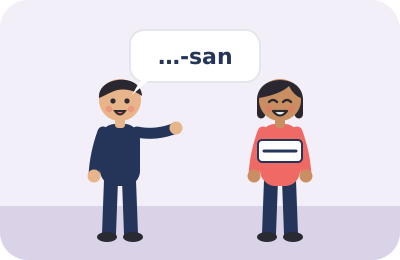
Good to know"-san" is a polite suffix added to another person’s name, regardless of gender or age. You never add it to your own name.
When does this apply?
In Japan it is common to call people by their family name plus "-san", as in "Tanaka-san". It is similar to Mr. or Ms. in English, but it works regardless of gender or marital status.
Why?
It shows respect for the other person and is a safe choice when unsure. Shops may use even more polite forms, such as calling customers "-sama".
What to do
- When unsure, use the family name plus "-san"
- If someone asks you to use their first name, follow their wish
- Introduce yourself without "-san"
Better to avoid
- Add "-san" to your own name when introducing yourself
Exceptions and differences
With children or close friends, people may use "-chan" or "-kun", or no suffix at all. At work, people may be called by their job title. It depends on the relationship and situation.
Manners can differ by region, facility and generation. Local signs and staff instructions come first.
Check with a quiz
Which is true about "-san"?
Choose an answer
Sources
Last checked:
This text was written with AI assistance and has not yet been proofread by a person.