How do people queue in Japan?
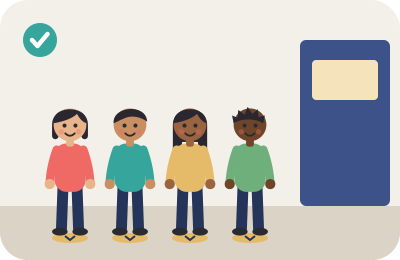
In short
Good to knowAt stations, popular shops and events, join the end of the line following signs or floor markers. Cutting in line is not done.
When does this apply?
In Japan, lines form in many places: train platforms, restaurants, shops before opening time and more. Staff sometimes hold signs showing the end of the line, and popular shops may hand out numbered tickets (seiriken).
Why?
Keeping to "first come, first served" lets everyone wait calmly, even in crowds.
What to do
- Look for the "end of line" (saibi) sign or floor markers and join there
- If you leave the line, assume you will not get your place back
- If there are numbered tickets, wait for your number to be called
Better to avoid
- Cut into the line
- Have one person hold a place and then bring in a large group of friends
Exceptions and differences
On escalators, the custom of keeping one side clear can be seen in some regions, but people are asked to stand still for safety. Some shops use a list where you write your name and wait to be called.
Manners can differ by region, facility and generation. Local signs and staff instructions come first.
Check with a quiz
There is a line outside a popular shop. What do you do?
Choose an answer
Sources
- Japanese Customs and Etiquette(opens in a new tab)
- Travel Etiquette for the Future (Promoting sustainable tourism)(opens in a new tab)
Last checked:
This text was written with AI assistance and has not yet been proofread by a person.